Public Keynote Lectures: What is ‘Worlding’ in Biocultural Worlding?
Public Keynote Lectures:
What is ‘Worlding’ in Biocultural Worlding?
Monday, 22 September 2025 · 6:30 - 8:00 PM
The public keynote lectures are part of an academic workshop titled “What is ‘Worlding’ in Biocultural Worlding?” The workshop probes what “worlding” means within the context of biological and cultural diversity across different disciplines, regions, and epistemologies. The keynote lectures will further explore the processes that shape our understanding of the world through the deep interconnections between cultural and biological life. Presenting these keynotes are Dr Lisa Onaga, Senior Research Scholar at the Max Planck Institute for the History of Science, Berlin and curator and researcher Dr Margarida Mendes. Together, their lectures will illuminate how biocultural worlding unfolds across land and sea, and how attending to these entanglements opens new ways of imagining collective futures in times of environmental and epistemic loss.
22 September 2025
6:30pm – 8:00pm
The Hall, NTU CCA Singapore
Keynote Lectures
Oceanic Worldings, Margarida Mendes
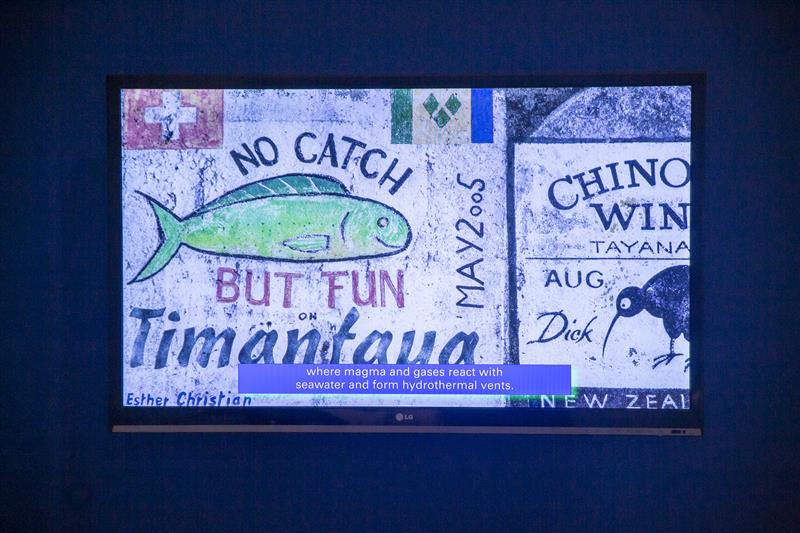
Exploring the concept of worlding from the ocean point of view, this presentation foregrounds ecosystemic, political and ontological relations across aquatic realms. It introduces ongoing research and activism on ecoacoustics, deep sea mining, and remote sensing, proposing how different modes of ocean monitoring may contribute to plural oceanic worldings and alliances in the making.
Turtle Worlds As A Way of Living, Lisa Onaga
From the adage “slow and steady wins the race,” symbols of longevity, to imagery of carrying a home upon one’s back, references to turtles appear in many languages and cultures around the world. Such “turtle metaphors” in language and material culture join a range of ways in which humans have regularly expressed themselves in relation to things of nature Diverse living things have long inspired human thought and action. However, propensities to regard nature as a resource can deepen a divide that casts humans apart from the natural world. Another perspective views humans as a part of a world where nature and culture are inseparable, encouraging a different way of knowing and talking about – and with – living things. From the earth known to Indigenous North Americans as Turtle Island, a directional guardian in Chinese cosmology, to ancestral gifts in the Torres Strait Islands, the reptiles we know as turtles, with their domed shells, have played a foundational role in holding together entire worlds, grounded in unique knowledge systems and protocols for correctly living a good life. In this presentation, I will reflect upon research efforts that initiated in 2016 to document the history of the Singapore Live Turtle and Tortoise Museum (LTTM), as the museum faced closure associated with state and city planning. At that time, the private museum held over 2000 objects turtle-themed objects (in the form of, but not made from, turtles), and approximately 600 individual turtles and tortoises – many of them former pets surrendered by members of the public in anticipation of the stricter regulations under the 2002 Singapore Animal and Birds Act, aligned with the Convention on International Trade in Endangered Species of Wild Fauna (CITES) treaty. The case of the LTTM and its persistence since 2001 to this day illustrates that both complementing and countering the separation of nature and culture enables the dynamic forming, maintaining, and caring of a “turtle world.” This example invites reflection on how biological and cultural practices grow entwined and embody forms of knowledge – in this case, “turtle knowledge” – and how that knowledge evolves, is practiced, shared, and passed down to the next generations.
What is ‘Worlding’ in Biocultural Worlding? is supported by CLASS JOINT NTU-ANU NTU-KCL CONFERENCE, SYMPOSIUM, AND WORKSHOP SCHEME.
The public keynote lectures are convened by Professor Ute Meta Bauer, Acting Director, NTU Centre for Contemporary Art Singapore and Professor, School of Art, Design and Media, Nanyang Technological University.