
Caption Tae ex eius, ulluptat. Natintur, ut exerum quaspero cupta dolorro que nos dem.
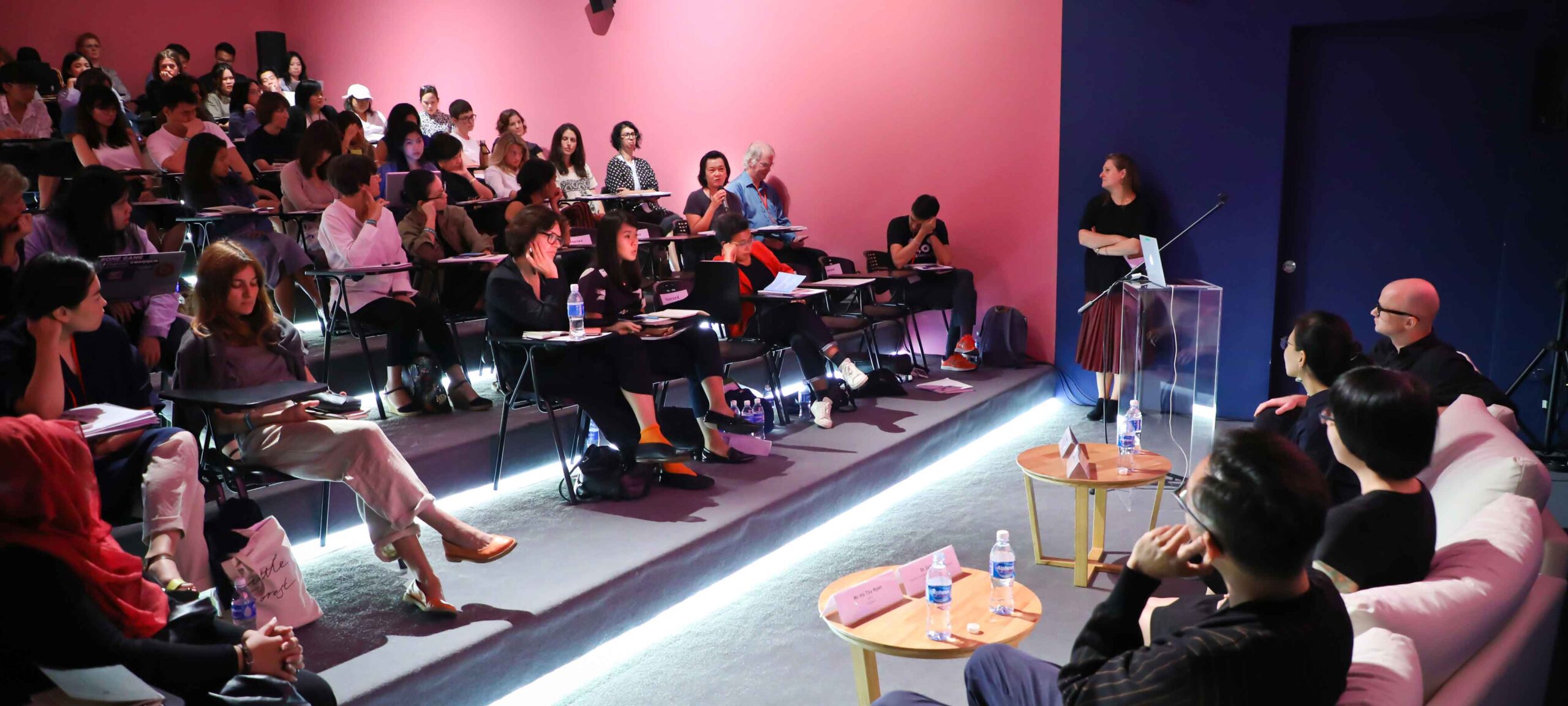
Programme Structure and Duration
Et aspel invent ene velenim agnimusapere odion re maximi, occulli bustio que nonseca boreruptur aut eatus dolecae veriores ut veliberunt, num etur. Faccusda se mosae nimi, officiur, que autem ditatur, sumquodis eum qui ad miligenis del modias eost doloria eumetur, velit aut officientum dolore, explisi tatium doluptatus ernat eos sum et alis comnimin cum am, solorum ne mo maximagnimod que eversped quamus.
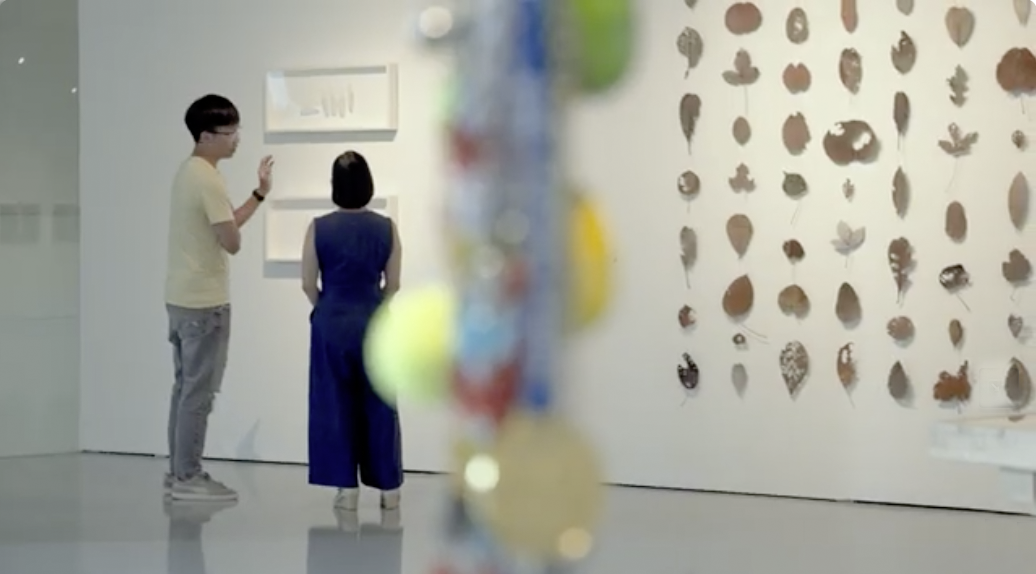
Caption Tae ex eius, ulluptat. Natintur, ut exerum quaspero cupta dolorro que nos dem.
Course Structure
The one-year full-time or two-to four-year part-time curriculum combines academic rigour with professional experience. It is structured around three interconnected pillars:
Curatorial Practices
Explore new fields of curating from festivals, public, private and corporate organizations, as well as diverse formats such as art in non-art spaces and in the digital sphere encompassing the various audio-visual formats of artistic practices and the wide variety spaces of the curatorial today.
Museum Studies
Examine the expanding roles of museums in both public and private contexts. Their transformation—from traditional institutions to cross-disciplinary and digital spaces—reflects the evolving institutional frameworks across Southeast Asia.
Cultural Heritage
Engage with diverse approaches to studying, managing, and preserving local and regional cultural histories, with a focus on Southeast Asia—its material cultures and forms of presentation.
Students are required to pursue one specialisation within the programme. At the time of submission, prospective students must indicate the specialisation they wish to pursue and should also specify a second choice.
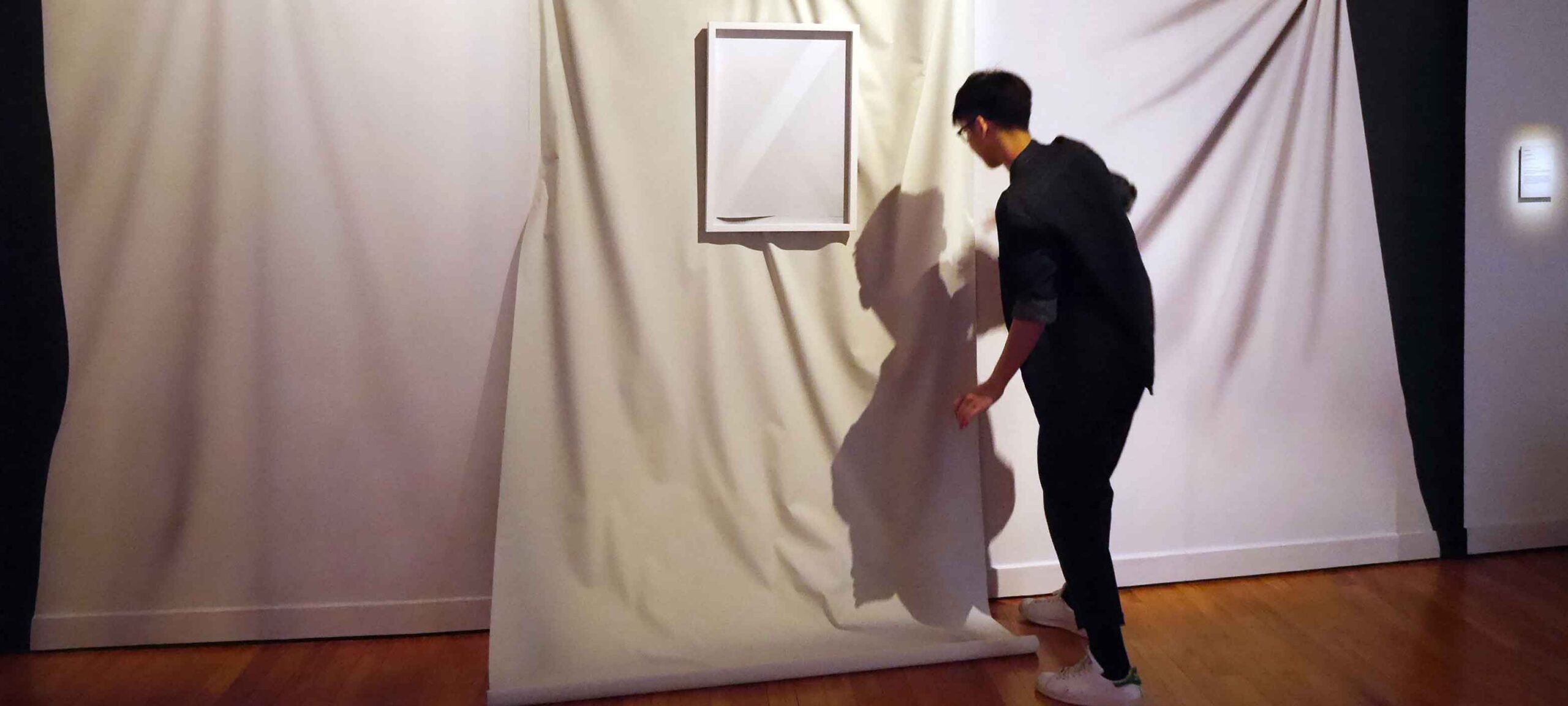
Caption Tae ex eius, ulluptat. Natintur, ut exerum quaspero cupta dolorro que nos dem.
Tracks
To graduate, students must complete a total of 30 Academic Units (AUs).
The requirements can be fulfilled through one of the following tracks:
10-Course Track
- Pass 1 Core Course (CC)
- Complete 4 Prescribed Electives (PE)
- Complete 5 additional Electives (E), chosen from either Electives or Prescribed Electives
Internship Track
- Pass 1 Core Course
- Complete 4 Prescribed Electives
- Complete 3 additional courses, chosen from either Electives or Prescribed Electives
- Complete a 10-week professional attachment at an approved art, museum, or heritage institution in Singapore or abroad. Submit a 5,000-word Internship Report upon completion of the attachment (6 AUs). A supervisor will be appointed to guide the student. Subject to availability.
Thesis Track
- Pass 1 Core Course
- Complete 4 Prescribed Electives
- Complete 3 additional courses, chosen from either Electives or Prescribed Electives
- Complete a 12,000–15,000-word Thesis on a subject approved by the MA Programme (6 AUs). The thesis may be based on primary source research or offer a reinterpretation of established aspects of a given subject. A supervisor with relevant expertise will be appointed to guide the student. Subject to approval.
Curriculum (for full-time students)
Classes are taught in English and take place on the NTU Campus, at the NTU Centre for Contemporary Art Singapore and other venues in town.
Classes are taught in English and take place on the NTU Campus, at the NTU Centre for Contemporary Art Singapore and other venues in town.